What Does Skydiving Feel Like?
General

Naturally, people want to know what skydiving will feel like before finding out firsthand. After all, it is a bit difficult to prepare for an experience if you don’t know what in the world to expect!
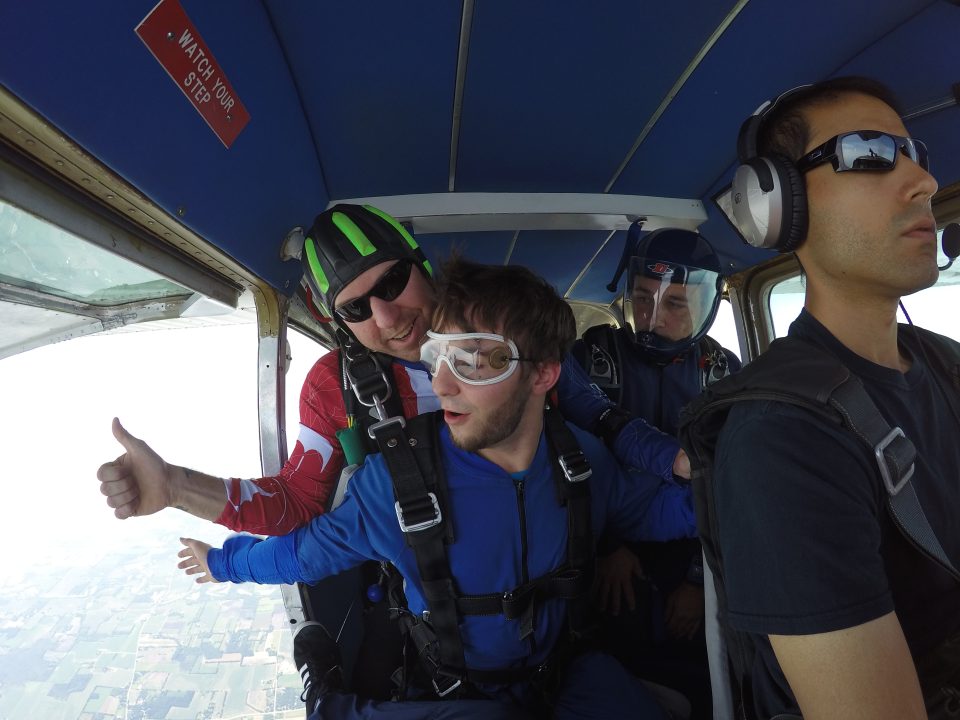
What is it like skydiving for the first time?
It feels like an out of body experience. On the plane ride to altitude, you can barely believe what you’re about to do or that you’re about to do it or why you decided to do it in the first place. This will pass. When it’s time to exit, you feel the peak of anticipation, but it fades quickly. You and your instructor will set up in the door. Ready. Set. Go. Quicker than the blink of an eye…
You are flying!
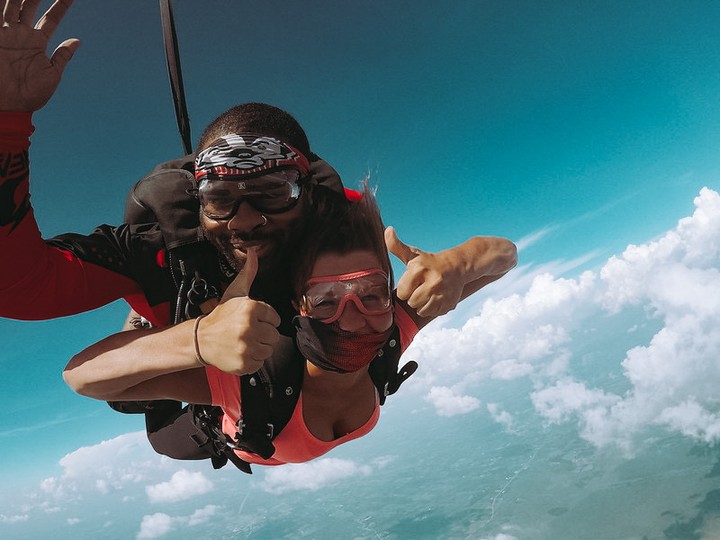
Tati absolutely loved her skydive. In her words, she felt “free.” “Freedom inside of her soul.” The benefits of skydiving go far beyond what most people ever imagine!
In your mind, you know you’re in freefall, but it feels like you are outside of yourself watching the whole thing unfold. Without a doubt, skydiving is an exhilarating rush. With your senses heightened from adrenaline, it feels like time slows down, and yet, freefall is over in a flash! Skydiving is intense, but it is also, surprisingly, serene. When the parachute opens, you come face to face with the beauty of the sky. As you look out around you, you see light glinting off the mountainous ranges of clouds, and perhaps, for the first time, you see the shadowed valleys they each contain as you fly amongst them. It’s like a sneak peek into a hidden world. When it’s over, skydiving leaves you with a feeling of awe and wonder that’s very rarely matched. Your brain is working hard to catch up with what your body just felt and there’s a moment when you feel outside of yourself. Honestly, the true feeling of skydiving can’t be fully captured in words: it has to be experienced.
Is skydiving the same feeling as a roller coaster?
Though both activities draw thrill seekers from near and far, the feeling you get skydiving and the feeling you get on a roller coaster are completely different. Quite a few people worry that they will get a stomach drop sensation on a skydive like they do on a rollercoaster. Luckily, this is not the case. The stomach drop sensation is caused by rapid acceleration. Because the aircraft you are in prior to skydiving is traveling across the ground at around 90 mph, the delta between your terminal velocity of 120 mph during the skydive and the speed of the aircraft is not enough to give you that jolting stomach drop feeling.
Can you breathe when you skydive?
Aside from the question, “what does skydiving feel like?”, the question we are most often asked is “Will I be able to breathe when I skydive?”. The answer is yes, but it will take a conscious effort. It’s easy to get swept up in the excitement of your skydive and find yourself fighting for air. But, there’s no reason you shouldn’t be able to breathe in freefall. It’s like if you were to sit in front of a reallllly strong fan or if you hung your head out of the window like your pup does, there’s a lot of wind in your face, but you can breathe just fine. The trick is to remember to do so! Because we encounter so many questions about breathing in freefall, we have an article dedicated entirely to the topic!
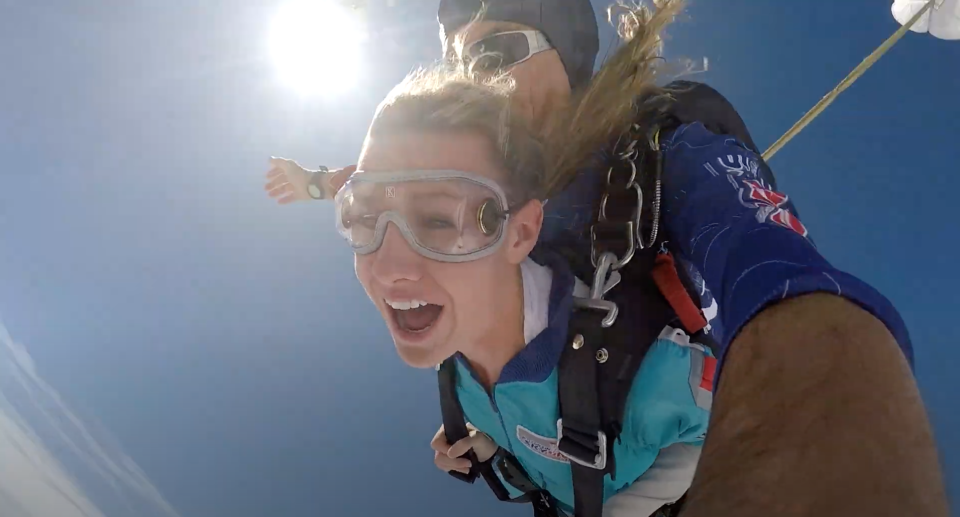
Is it scary to skydive?
The anticipation and nerves leading up to a skydive are generally far greater than any feeling of fear during the skydive. The ride to altitude can be mentally challenging, but just keep in mind what awaits on the other side of that door: freedom and the adventure of a lifetime.
One thing you can be sure of: skydiving is incredibly safe and it is our highest priority at Wisconsin Skydiving Center.
How long does the skydive last?
Your skydive is composed of many parts: the ride to altitude, the freefall, and the canopy flight under the parachute. The plane ride to altitude takes around 20 minutes. The freefall portion of the skydive lasts for one wondrous minute. The canopy flight under the parachute lasts around 5 minutes.
These times are a bit misleading. Skydiving “time” is unlike the regular progression of moments you experience in the day-to-day. Those moments will seem at once elongated and compressed. It’s as if you’re in another dimension.
Whether it’s your first time skydiving or you’re a pro, you never lose that feeling.
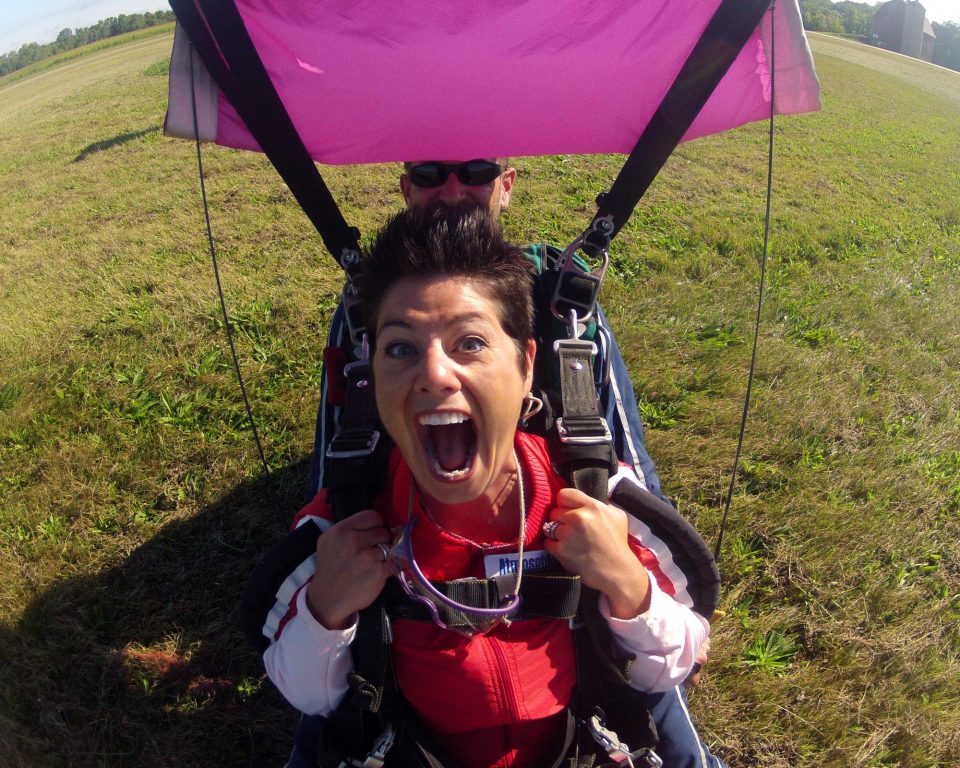
Ready to compare our description to the real thing and experience the feeling of skydiving for yourself? Learn more about tandem skydiving today! Check out our prices here.
You May Be Interested In:
5 Unique Skydiving Proposal Ideas
4 weeks ago by Wisconsin Skydiving Center

The Best Skydiving Memes
2 months ago by Wisconsin Skydiving Center

How Much Do Skydiving Instructors Make?
4 months ago by Wisconsin Skydiving Center
A Day in the Life of a Jumper Pilot
8 months ago by Wisconsin Skydiving Center